
Expulsion from the Garden of Eden
- Date of Creation:
- 1427
- Medium:
- Other
- Support:
- Other
- Subject:
- Figure
- Technique:
- perspective, vanishing-point
- Characteristics:
- humanism
- Framed:
- No
- Art Movement:
- Renaissance
- Created by:
- Current Location:
- Florence, Italy
- Expulsion from the Garden of Eden Page's Content
- Story / Theme
- Inspirations for the Work
- Analysis
- Critical Reception
- Related Paintings
- Artist
- Art Period
- Bibliography
Expulsion from the Garden of Eden Story / Theme
Genesis, 3
"And the LORD GOD sent him from the Garden of Eden to till the soil from which he had been taken. And He drove out the human and set up east of the Garden of Eden the cherubim and the flame of the whirling sword to guard the way to the tree of life."
-

Expulsion from the Garden of Eden
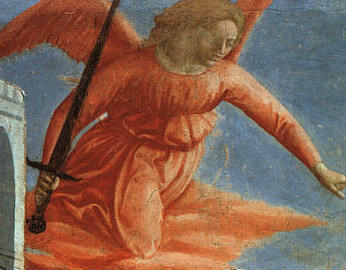
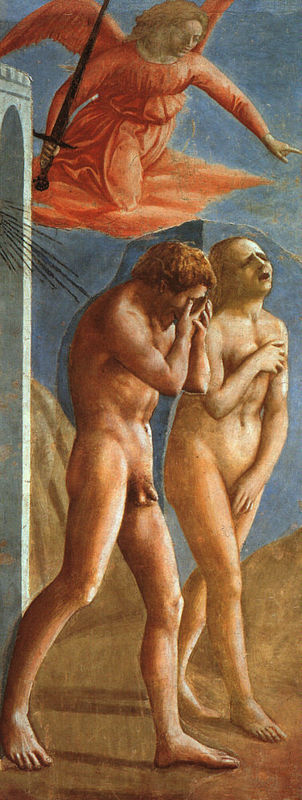
The story of the Fall of Adam form the book of Genesis is one of the most famous stories in Western culture. Adam and Eve had everything they wanted but disobeyed God's word to have a bite from the tree of knowledge and were then banished from the Garden of Eden to live in the wilderness and be subject to a mortal life.
Masaccio's portrayal:
Masaccio's rendition of the story makes the viewer immediately aware of the shame and pain Adam and Eve suffered while being banished from Eden. The painting is striking and brutal in its portrayal of the abashment of the couple as they walk out of the Garden of Eden into desolation.
Once again Masaccio presents a traditional theme of Christian faith while depicting the scene in vivid detail and with revolutionary uses of perspective.
Expulsion from the Garden of Eden Inspirations for the Work
-
Jacopo della Quercia´s Fall of Adam
-
Prudence
Expulsion from the Garden of Eden, as well as the other frescoes in the Brancacci Chapel, was commissioned by the Brancacci family and while most of the paintings depict the story of St. Peter the family's patron saint, this is an exception.
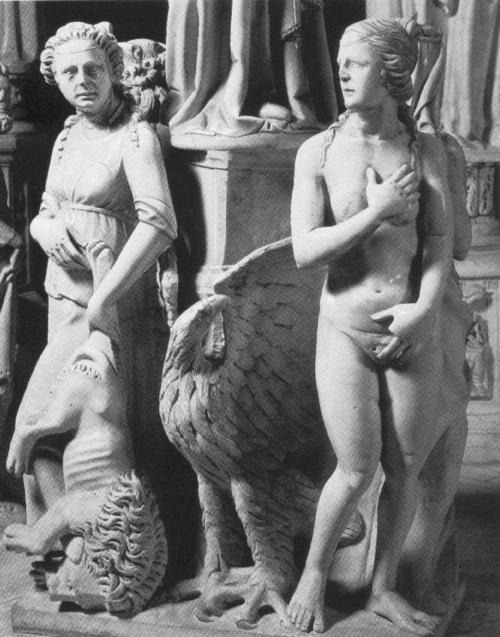
There have been many proposed sources of inspiration. Some say that the picture is similar to the sculptor Jacopo della Quercia's version for the Fonte Gaia in Siena. Yet other think that Masaccio took his idea for Adam from the satyr Marsyas, from Greek Mythology.
It is thought that Eve derived from different versions of Venus Pudica, such as Giovanni Pisano's Prudence.
Expulsion from the Garden of Eden Analysis
-
Expulsion from the Garden of Eden, before and after restoration
-
Expulsion from the Garden of Eden
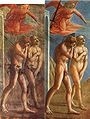
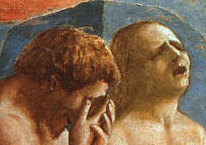
Brush stroke:
Masaccio's heavy brush and thick shading give Adam and Eve the perfect human likeness.
Use of light:
The use of the subtle light source from the right side of the painting allows Masaccio to go into detail with regards to Adam and Eve's bodies. As is the case with Masaccio's other works, the characters are not defined by lines but by detail and color.
Expression:
The facial expression and the depiction of nudity push this painting further to what was no less polemic during the time. The nudity shown was later covered up with fig leaves painted over the top and these were not removed until the 1980s during restoration.
Miscellaneous:
This painting has been used in medical textbooks for its anatomical exactness.
Expulsion from the Garden of Eden Critical Reception
-
Bernard Berenson
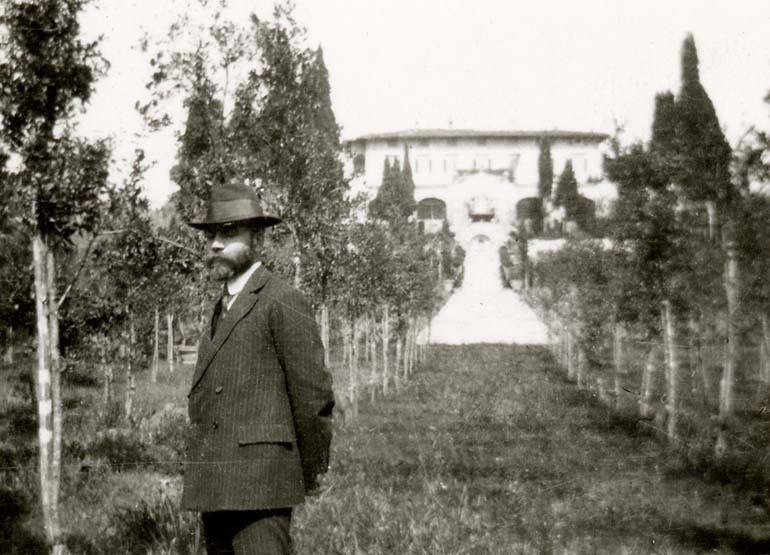
Bernard Berenson writes;
"Even Michelangelo, where he comes in rivalry, has, for both reality and significance, to take a second place. Compare his 'Expulsion from Paradise' (in the Sixtine Chapel) with the one here by Masaccio. Michelangelo's figures are more correct, but far less tangible and less powerful; and while he represents nothing but a man warding off a blow dealt by a sword, and a woman cringing with ignoble fear, Masaccio's Adam and Eve stride away from Eden heart broken with shame and grief, hearing, perhaps, but not seeing, the angel hovering high overhead who directs their exiled footsteps. "
Legacy:
The Expulsion of Adam and Eve from the Garden of Eden has been looked upon as one of the best from the Brancaccio Chapel. The use of light, colors, perspective and emotion drastically demonstrates Masaccio's skill.
Expulsion from the Garden of Eden Related Paintings
-
-
-
-
The Fall
-
Adam and Eve
-
Expulsion
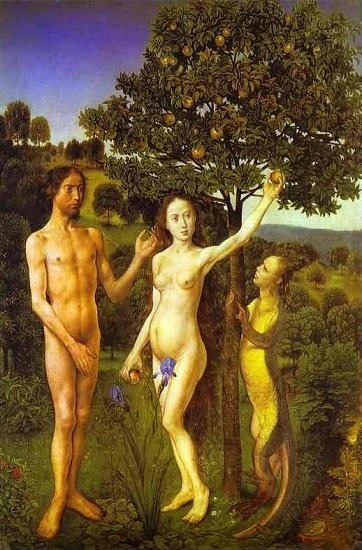
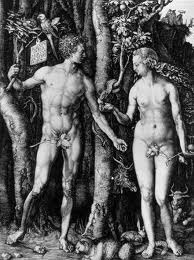
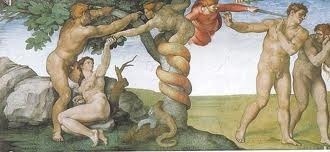
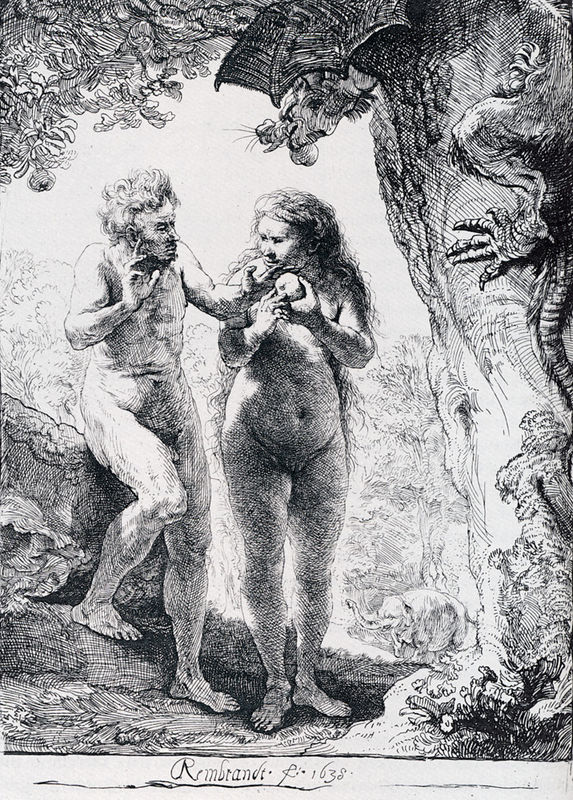
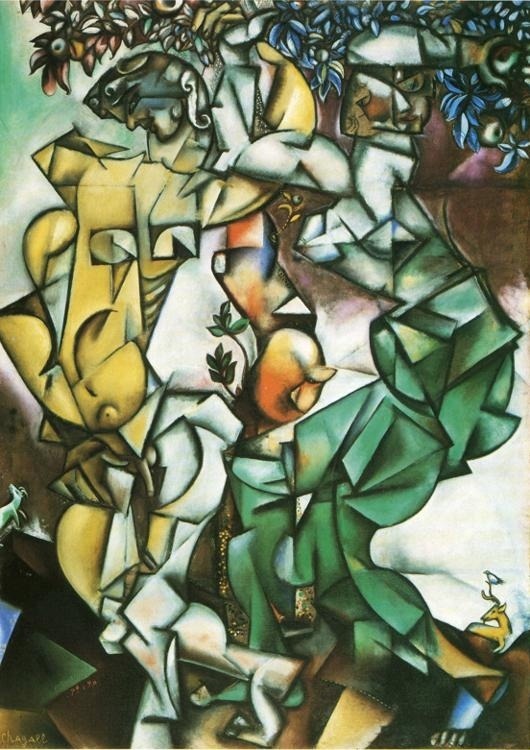
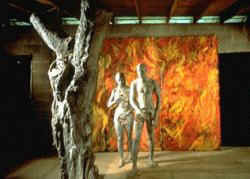
The theme of the Expulsion from the Garden of Eden, is one of the most popular theme in religious paintings.
Some of the most well-known pieces based on this subject include;
Hugo van der Goes, The Fall of Adam, 1470
Albrecht Durer, Adam and Eve, 1507
Michelangelo, Fall and Expulsion of Adam and Eve, 1510
Rembrandt, The Fall 1638
Marc Chagall, Adam and Eve 1912
George Segal, Expulsion, 1986
Expulsion from the Garden of Eden Artist
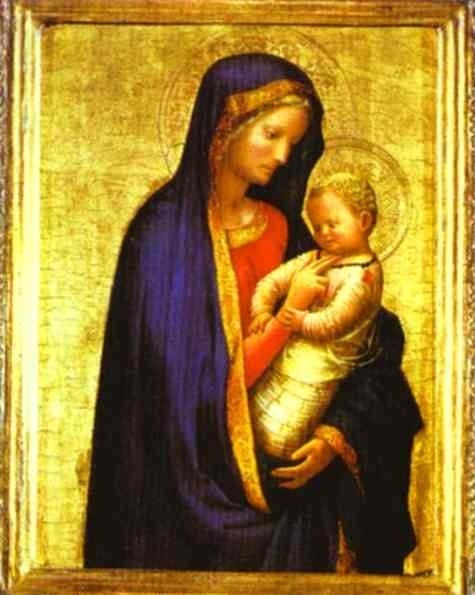
Masaccio was born in 1401 outside of Florence. He became a professional painter around the age of 21 and worked with Masolino to create frescoes of the Brancacci Chapel. It is thought that Masaccio left his work at the Brancacci Chapel due to insufficient funding from the Brancacci family and died a few years later in Rome.
Masaccio is known for having incorporated perspective and humanism into painting. He is known as one of the founders of the Renaissance and his work, including this piece, has been studied by painters throughout the Renaissance including Michelangelo, Raphael, Lippi, and Leonardo da Vinci.
Expulsion from the Garden of Eden Art Period
-
Temptation of Adam
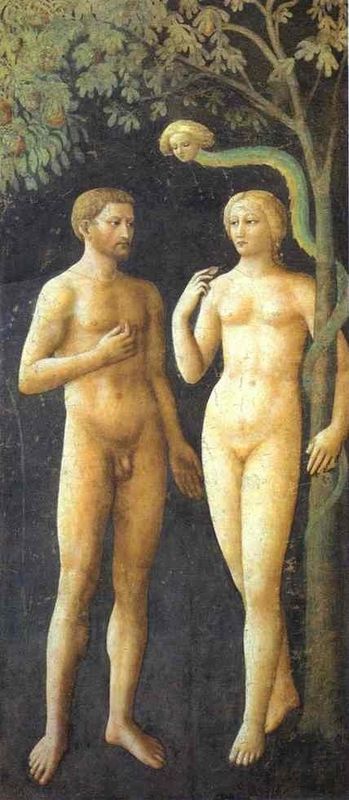
European society changed dramatically during the Renaissance. Artists and scholars began reverting back to Classicalism and ideas and new innovations flourished. With the invention of the printing press, knowledge spread rapidly and the whole continent began to change.
Brancacci Chapel:
In the Brancacci Chapel where most of Masaccio's work is displayed, viewers can witness the end of Gothic era and the beginnings of the Italian Renaissance. Masaccio's counterpart Masolino, while having been much influenced by Masaccio, demonstrated a soft symbolic tone while Masaccio, just a few feet away, would explore perspective and integrated shaping and a realistic human form that came to define humanism in the Italian Renaissance.
Expulsion from the Garden of Eden Bibliography
To find out more about Tommaso Masaccio please refer to the following recommended sources.
• Baldini, Umberto. Masaccio. Gallimard, 2001
• Borsi, Stefano. Masaccio. Giunti Editore, 2007
• Frosinini, Cecilia. Masaccio (Great Painters). Giunti Editore, 2008
• James, N. P. Masaccio - Trinity: The Emergence of a Psychodynamic Image (CV/Visual Arts Research). CV Publications, 2004
• Rowlands, Eliot W. Masaccio: Saint Andrew and the Pisa Altarpiece (Getty Museum Studies on Art). J. Paul Getty Museum, 2003
• Strehike, Carl Brandon, et al. The Panel Paintings of Masolino and Masaccio: The Role of Technique. Five Continents Editions, 1999