
Sandro Botticelli
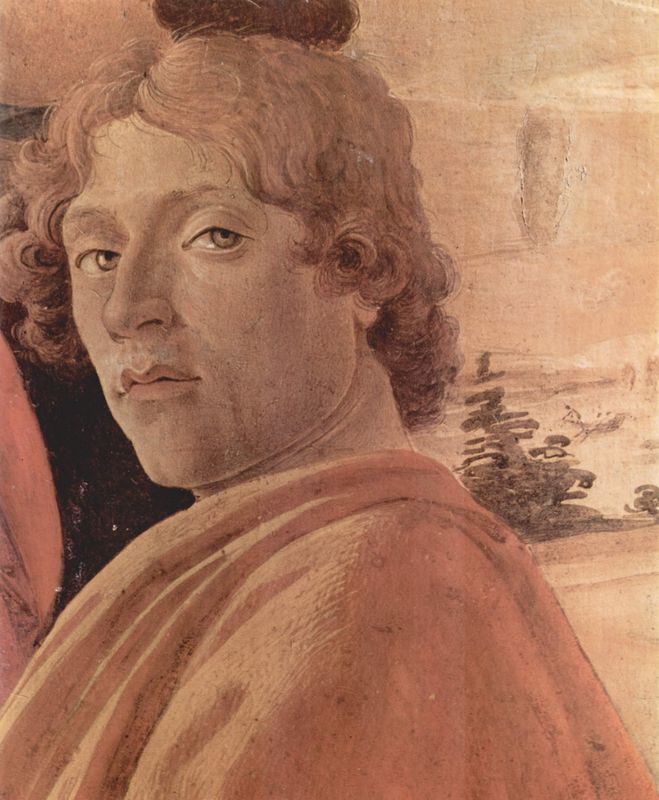
- Full Name:
- Alessandro di Mariano Filipepi Botticelli
- Short Name:
- Botticelli
- Date of Birth:
- 1445
- Date of Death:
- 17 May 1510
- Focus:
- Paintings
- Mediums:
- Oil
- Subjects:
- Figure
- Art Movement:
- Renaissance
- Hometown:
- Florence, Italy
- Sandro Botticelli Page's Content
- Introduction
- Biography
- Style and Technique
- Who or What Influenced
- Works
- Followers
- Critical Reception
- Bibliography
Introduction
Sandro Botticelli was an Italian painter and draughtsman. During his lifetime he was one of the most acclaimed painters in Italy, being summoned to take part in the decoration of the Sistine Chapel in Rome and earning the patronage of the leading families of Florence, including the Medici. By the time of his death, however, Botticelli's reputation was aleady in decline.
He was overshadowed first by the advent of a new style by Perugino and Francesco Francia and then totally eclipsed with the establishment of High Renaissance style, with the paintings of Michelangelo and Raphael in the Vatican. From that time Botticelli's name virtually disappeared until the reassessment of his works and reputation - a process which has gathered momentum since the 1890s.
Sandro Botticelli Biography
-

Filippo Lippi
-
Early years:
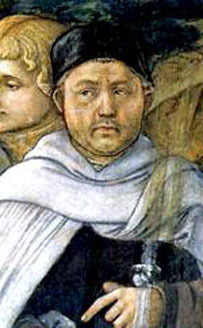
Alessandro di Mariano Vanni Filipepi Botticelli is better known as Sandro Botticelli, meaning 'small wine cask', a nickname taken from that of his elder brother. Botticelli was the son of a tanner and may have originally trained as a Goldsmith, but then entered the studio in Florence of Fra Filippo Lippi, who taught him painting.
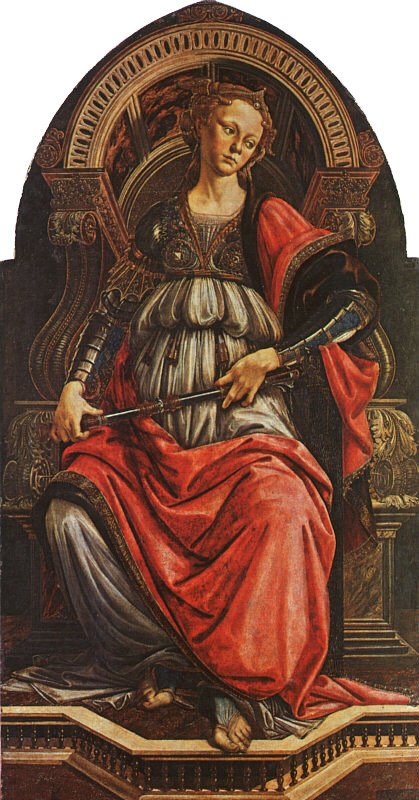
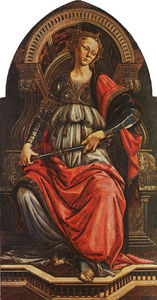
The first mention of Botticelli as an independent master came in 1470 though art historians believe he probably arrived at this status earlier. In 1470 Botticelli also executed his first securely dated painting, named Fortitude and completed the series of Seven Virtues.
By the age of 15 Botticelli already had his own workshop and this helped form his distinctive artistic style. This style incorporated Neo-Platonism, a method that helped him appeal to many tastes by including Christianity and paganism in his works.
Middle years:
Botticelli's artistic and financial highpoint was reached during his middle years when he had contacts, money and fame as a result of the Medici family's patronage.
The Medici's influence greatly increased Botticelli's notoriety and during their patronage he was asked by the Papacy to travel to Rome in order to paint parts of the Sistine Chapel. This honor confirms the esteem in which Botticelli's art was held, given that the honor of decorating the Chapel was only extended to some of the Renaissance's greatest artists, such as Perugino and Michelangelo.
Advanced years:
Botticelli's achievements lessened after coming under the influence of the controversial Florentine monk, Savonarola. Savonarola encouraged the burning of many works of art and books, which were deemed to be ungodly, and being a follower of Savonarola, Botticelli took part in destroying many of his own paintings. Despite this, after Savonarola's downfall, Botticelli remained in Florence and continued to make a name for himself as one of the best painters of altarpieces.
Despite his success as an altarpiece painter, Botticelli struggled to keep pace with the revolutionary changes taking place in art during this time. The arrival of Leonardo Di Vinci and Michelangelo on the artistic landscape further pushed Botticelli's work from the spotlight.
Sandro Botticelli Style and Technique
-
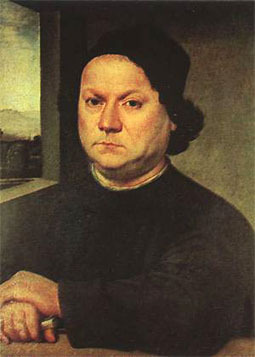
Andrea del Verrocchio
-
-
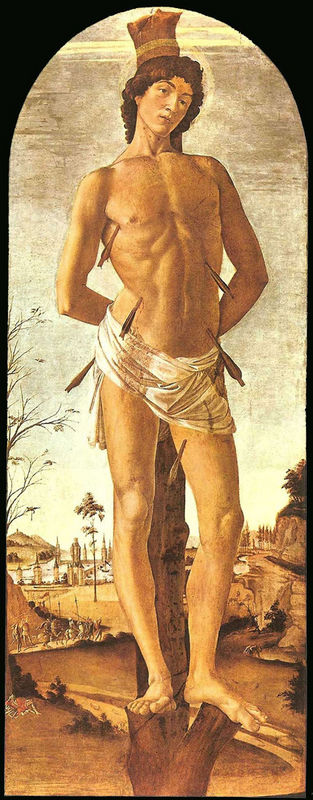

Early years:
Botticelli's early works followed the then popular style in Florence which placed importance on the human figure rather than on space. This style was also used by artists such as Andrea del Verrocchio. In Botticelli's major early works (Fortitude and St. Sebastian) he changes the appearance of muscular energy and physical action as found in Verrocchio's work. The characters in Botticelli's work are displayed as melancholy and thoughtful.
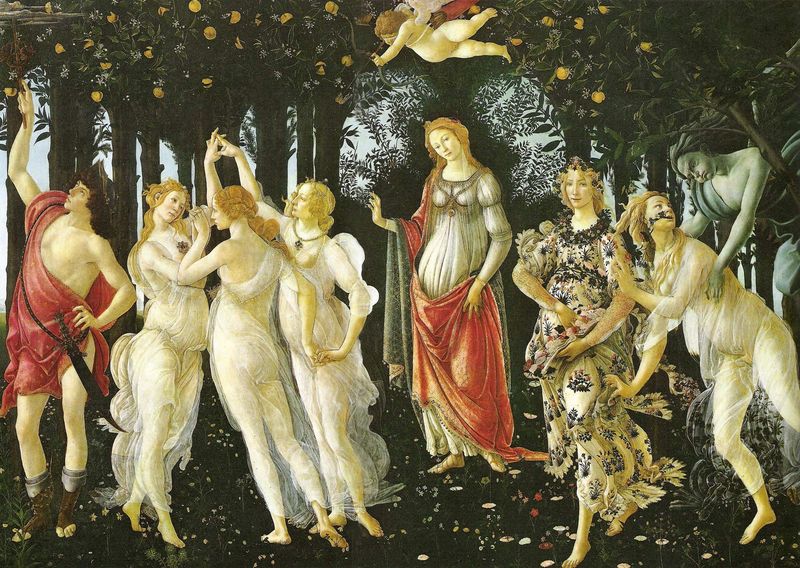
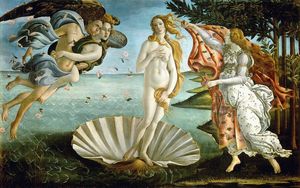
Such qualities are also exhibited in Botticelli's best-known works, Spring and the Birth of Venus, executed for the estate of a cousin of Lorenzo the Magnificent, Lorenzo di Pierfrancesco de' Medici. Both works were almost certainly designed in conjunction with a scholar.
Botticelli continued using his early style after 1480, but a new method soon emerged in frescoes such as St. Augustine in the Church of the Ognissanti, Florence, and the three frescoes in the Sistine Chapel. These frescoes show a concern with the construction of stage-like spaces and stiffer figures, also seen in a series of altarpieces from 1485 and 1489.
Mature years:
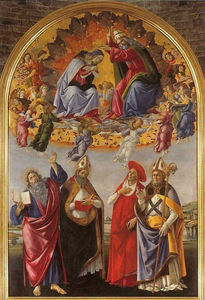
After 1490, Botticelli concentrated on paintings with numerous small figures, so that the entire picture surface seemed more alive. Many works provide examples of this new method, such as the Calumny of Apelles, the Crucifixion, the Last Communion of St. Jerome and the Nativity, which used an old design of Fra Angelico and an inscription referring to current predictions of the end of the world.
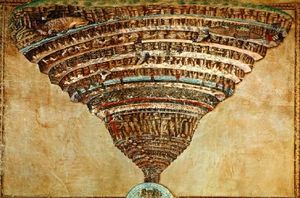
After Botticelli became crippled in his later years, he failed to receive painting assignments. He may have continued to work on his set of drawings (never finished) illustrating Dante's Divine Comedy.
Roughly halfway through the first decade of the 16th-century, Botticelli's art would have seemed old-fashioned compared to the works of Da Vinci and Michelangelo, even though it had been widely copied and revered during the 1490s.
Who or What Influenced Sandro Botticelli
-
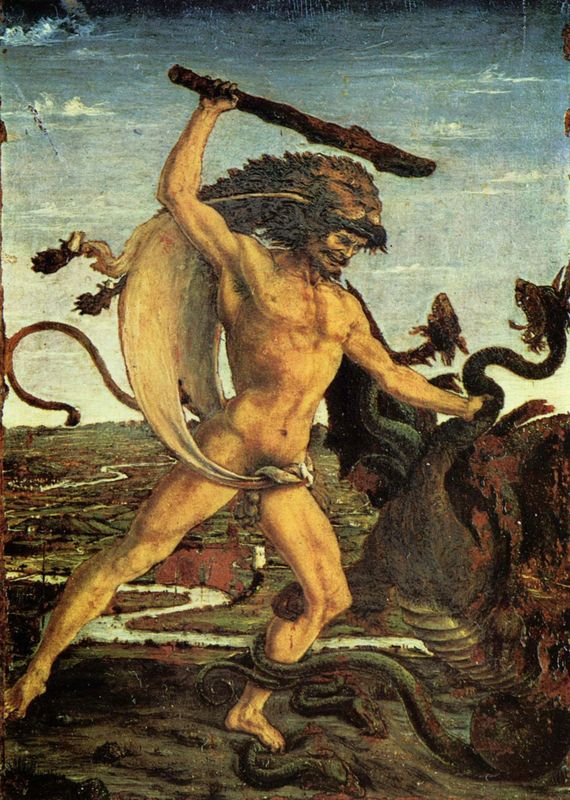
Antonio del Pollaiolo
At the age of 14 Botticelli's father placed him under the artistic direction of Filippo Lippi, one of the most admired Florentine masters of his time.
Lippi's painting style, formed in the early Florentine Renaissance, was fundamental to Botticelli's own artistic formation and the master's influence is evident in most of Botticelli's works. Lippi taught Botticelli the techniques of panel painting and fresco along with giving him an assured control of linear perspective. Botticelli also acquired from Lippi a repertory of composition styles, a linear sense of form and a preference for paler colors, still evident even after Botticelli had developed his own resonant color schemes.
After Lippi left Florence, Botticelli worked to improve the soft figural style he had developed with his teacher. For this, he studied the sculptural style of Antonio Pollaiuolo and Andrea del Verrocchio, the leading Florentine painters of the 1460s. It was under their influence that Botticelli produced figures of sculptural roundness and strength.
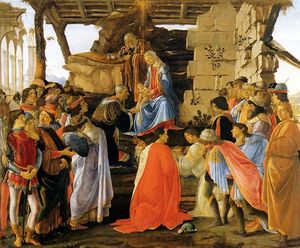
Sandro Botticelli Works
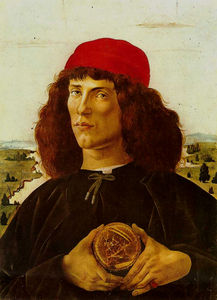
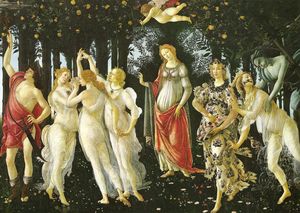
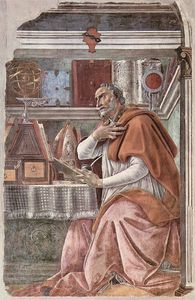
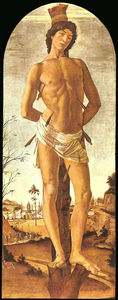
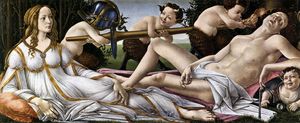
Sandro Botticelli Followers
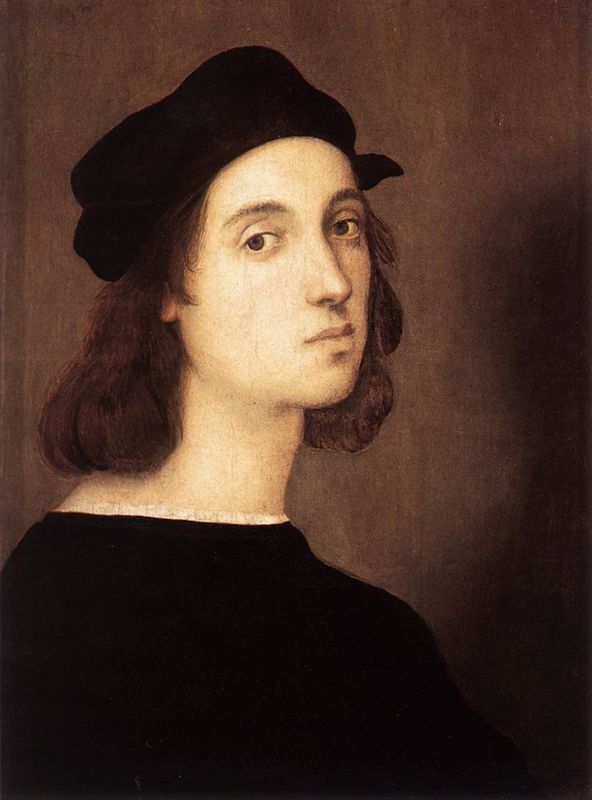
Sandro Botticelli died at the age of 65 and popular accounts suggest that he was poor, unaccomplished and little noticed by the time of his death. This is commonly attributed to his total artistic eclipse, which took place during his own lifetime from the rising popularity of new and contemporary artists such as Michelangelo, Raphael and Leonardo da Vinci.
Whilst from the late 19th century, since his rediscovery as a titan of Renaissance art by the Pre-Raphaelites, Botticelli's work has been recognized to be among the most masterful of his time, his paintings lay forgotten for over 400 years after his death. Looking back at history, he now has the respect he earned through a lifetime of achievement. Thus, Sandro Botticelli's contribution to the Italian Renaissance period was one of great distinction.
Sandro Botticelli Critical Reception
-
Lorenzo de' Medici
-
Dante sketch
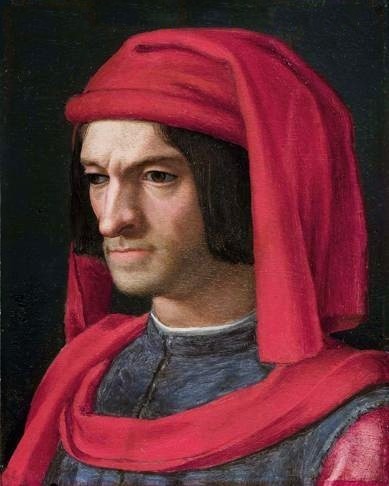
One school of critical thought has held Botticelli as a decadent artist, connected with the culture embodied in Lorenzo the Great, the once de facto ruler of the city of Florence, poet, philosopher, and sophisticate.
Although Botticelli was enormously successful during the 1470s and 1480s, he fell out of fashion and was forgotten at the time of his death. Nevertheless, he was greatly acclaimed again in the 19th century, especially in England by the Pre-Raphaelites, who found that he legitimized their style, which combined the sensuous and the immaterial.
Some scholars have considered this to be a misreading of Botticelli and have stressed his Florentine concern for solidly modeled form and religious exposition. With this criticism, admiration for his work has subsequently declined.
Recent study has also tended to reject the picture of Botticelli as first a member of Lorenzo's intellectual circle and later a devotee of the religious reformer Girolamo Savonarola.
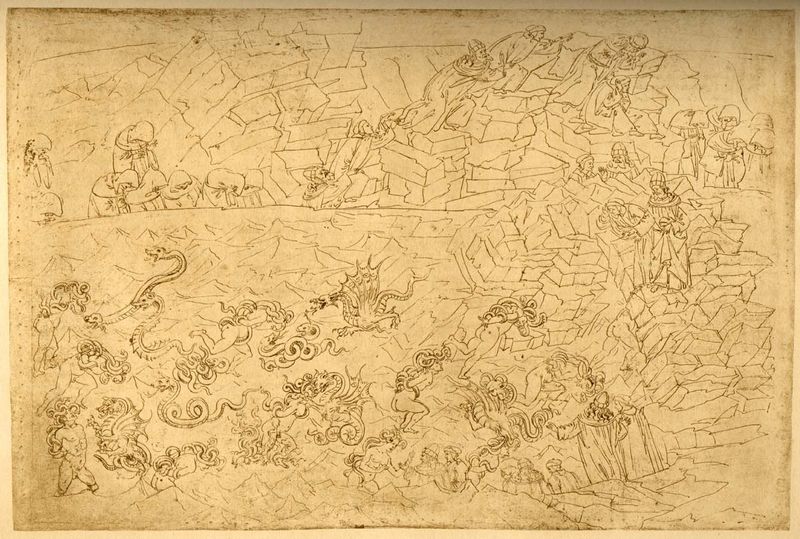
In his late years Botticelli was crippled and failed to receive commissions, but he may have continued to work on his set of drawings (never finished) illustrating Dante's Divine Comedy. By about 1504, when the young Raphael came to Florence to observe the new models of Leonardo and Michelangelo, Botticelli's art must have seemed obsolete, even though it had been widely imitated in the 1490s.
Sandro Botticelli Bibliography
To read more about Botticelli and his works please choose from the following recommended sources.
• Zollner, Frank. Botticelli. Prestel, 2009
• Basta, Chiara. Botticelli. Rizzoli International Publications, 2005
• Altcappenberg, Dr. Hein Schultze. Sandro Botticelli: The Drawings for Dante's Divine Comedy. Royal Academy of Arts, 2000
• Lightbrown, R. W. Botticelli: Life and Work. Abbeville Press Inc, 1996
• Proud, Linda. The Rebirth of Venus. The Godstow Press, 2008
• Gebhart, Emilie. Botticelli. Parkstone Inter, 2010